Posts

Showing posts with the label Goats

From Puerto Rico to Nebaj, Guatemala: A Volunteer's Personal F2F Experience

Image
Written by F2F Volunteer Dr. Abner Rodriguez, Professor at the  University of Puerto Rico, Mayaguez Campus Located in Nebaj, Department of Quiché, Guatemala, Save the Children, with USAID and other funding agencies, developed the Goat Production Center of the Western Highlands, known by its Spanish acronym CEPROCAL (Centro de Producción Caprina del Altiplano). The project is focused on reducing malnutrition in families with children in Nebaj and other rural areas with the highest poverty rates in the country. In Guatemala’s Western Highlands, chronic malnutrition in children is the result of multiple factors, being the most important the lack of a good source of protein at the onset of the weaning period. Raising goats for milk production is the international agency and funding organizations strategy to alleviate the problem. During the last years, goat milk has been utilized for hundreds of families to improve children’s diets and as a product for local cheese production. In ord...
Marketing of Goat Milk Products

Image
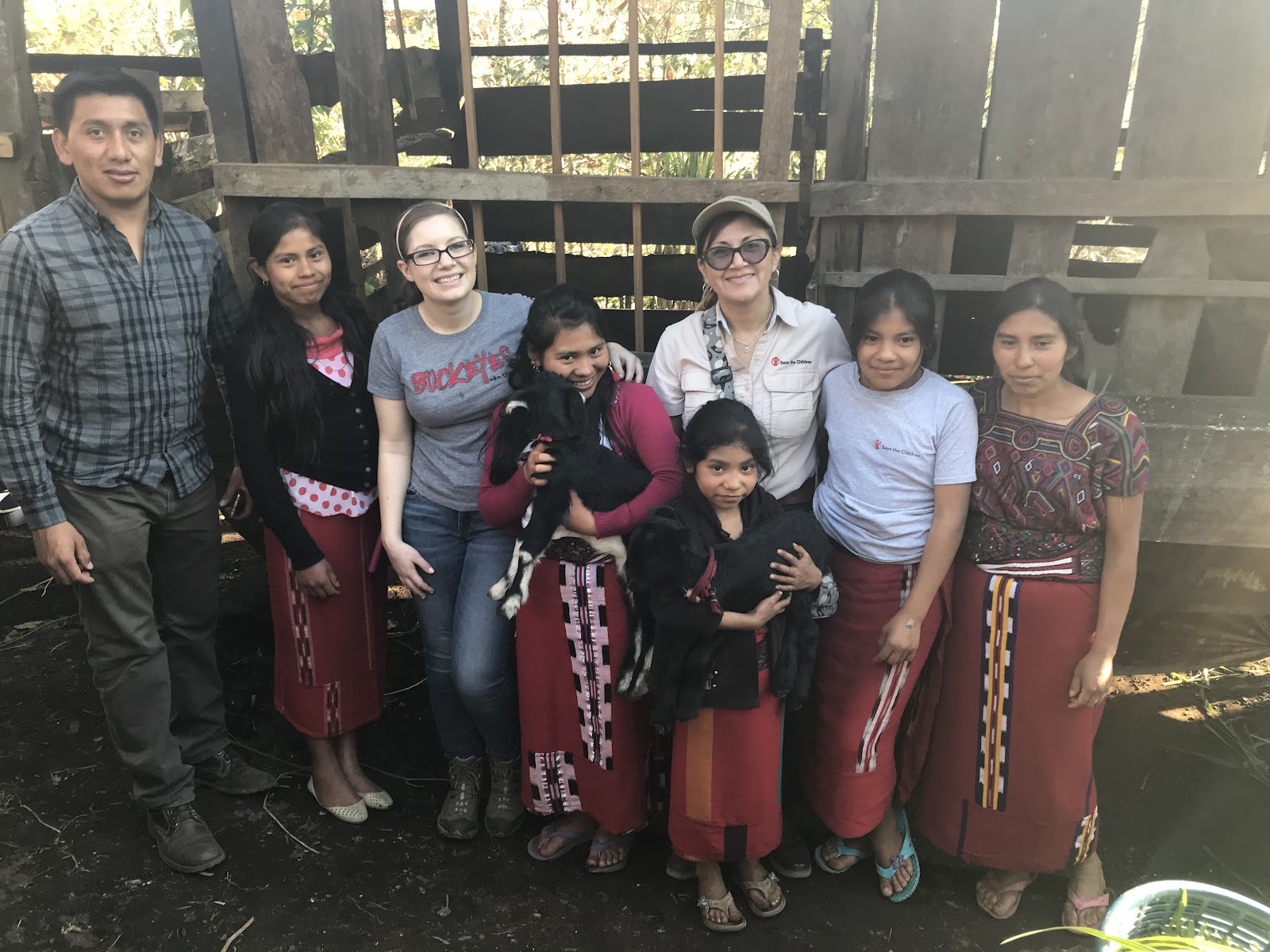
Kristen Gartland traveled to Guatemala as an F2F volunteer for 2 weeks in March 2018 to assist CEPROCAL with their marketing strategies. CEPROCAL is the Center for Goat Production in the Altiplano of Guatemala. CEPROCAL was initially founded by Save the Children. It is funded by Save the Children, USAID, Agros and Keurig Green Mountain. CEPROCAL’s focus is to fight malnutrition in the Ixil area (Quiché). They do this by providing a female goat to a family in need, then breeding that goat with one of their male goats. Once the female goat has kids, the family who received the goat becomes responsible for donating a goat to another family in need. This process has helped over 30 families so far. When products are purchased from CEPROCAL it gives them the funds they need to continue these services. Kristen spent 3 days at CEPROCAL, learning more about the company and the employees who work there. She took photos for the website and was taught about how the products are made and the proces...

Transforming Goat Milk into Valued-Added Soaps & Lotions

Image
Team Presentations at the CEPROCAL Center in Nebaj The first concrete evidence of soap-like substance is dated around 2800 BC., the first soap  makers were Babylonians, Mesopotamians, Egyptians, as well as the ancient Greeks and Romans. While volunteer Robert Spencer does not have that many years of experience he does have sixteen years of experience in making cold-process goat milk soap, shampoo, and lotion.  And has done multiple trainings in Myanmar, Haiti, and Guatemala.  The overall goal of this project was to provide economic opportunities for women in small-scale production of value-added agriculture products (oils, animal byproducts, herbs, vegetables, and fruits), along with goat milk in making skin care products including soap, shampoo, and lotion in rural areas of Guatemala.  This project host was CEPROCAL who collaborated with Save the Children Foundation, and the first week of training was conducted in Nebaj (El Quiche Department) at the local CEPROCAL o...

Goat Milk is a Solution for the Socio-Economic Wellbeing of Rural Guatemala

Image
By Young W. Park, Ph. D., F2F Volunteer While sometimes overlooked, goat milk can be an important source of essential nutrients and animal-based proteins for the people of developing countries. During the last four decades, the reputation of the dairy goat has been changing and is now has become a vital member of the world dairy industry. The FAO statistics (2001) have shown that goat milk makes up 55% of all milk consumed in Bangladesh, 51% in Somalia, 24% in Iran, and 16% in Sudan, demonstrating the significance and nutritional value that goat milk has for emerging economies. The world statistics of goat milk production also shows a 62% increase from 1993 to 2013 or from 11 to 18 million metric tons, with France, Spain, Turkey and Greece leading in tonnage in that order. To my knowledge, there has been no comprehensive statistics on how much goat milk has been produced or how many small dairy goat producers are currently working in Guatemala. Currently in Guatemala, there is a series...

Meat Goat Production & Management in Haiti

Image
Photo from first training of Makouti technicians by Farmer-to-Farmer Volunteer Robert Spencer I have been volunteering in Haiti for ten years. My initial work involved meat rabbit production and evolved into food security and meat quality assurance; this is my first assignment specific to meat goat production and management. This assignment was expected to help producers to 1) evaluate/assess their current system of goat production management, including feeding, reproduction, and overall maintenance (shade, ventilation, aeration, heat, etc.); 2) identify and reinforce best practices to improve the quality of their product. Excessive rains and flooding were a serious constraint during this visit, we received over 36” of rain during our two weeks. For the first five days we had limited access to areas beyond the hotel, and our in-country colleagues were unable to access us. Myriam Kaplan-Pasternak (F2F volunteer from California) and I took advantage of this time to develop relevant trai...

An Interesting Source for Organic Fertilizer

Image
Over the years, a number of our F2F volunteers have worked in the area of soil fertility. As synthetic agro-inputs can be pricey, oftentimes our volunteers teach hosts about organic soil fertility management practices such as the use of green manures, compost, companion crops, crop rotations, and animal manure. One common and inexpensive source of macronutrients, however, frequently gets overlooked: urine.  Stored goat urine at CEPROCAL In March 2016, F2F volunteer Rob Crook traveled to Guatemala for a two week assignment to train extension agents with the Center for Goat Production in the Altiplano of Guatemala (CEPROCAL) on how to make liquid fertilizer and compost using goat urine. CEPROCAL currently captures and stores the urine produced by stabled goats at their production center. While CEPROCAL technicians have speculated that the urine is an excellent source of nutrients for fertilizing home gardens and pastures, they did not know how to best utilize it and in what quan...

The Innovation-Decision Process in Action

Image
Whether it’s facilitating capacity building workshops on agricultural production, processing, marketing, or another theme, a large part of the F2F program, in a sense, is about the diffusion of innovations. For this discussion, innovation is defined as an idea, practice, or object that is perceived as new by an individual or other entity. Often times when a F2F volunteer gives a recommendation to a F2F host, the volunteer is encouraging the adoption of a particular innovation. While the process may seem fairly straight forward – volunteer gives a recommendation and the host implements it – the actual adoption of that recommendation is a multistage progression often referred to as the Innovation-Decision Process (a model developed by rural sociology professor Dr. Everertt Rogers).  Rogers' Innovation-Decision Process Model So how does this process look applied? Let’s take a look at how the Innovation-Decision Process progressed as a result of Bill Knox’s F2F assignment with the...